
Can You Reset Your Body’s Weight Set Point? Here’s What Science Says
Set-point theory
5/22/20253 min read

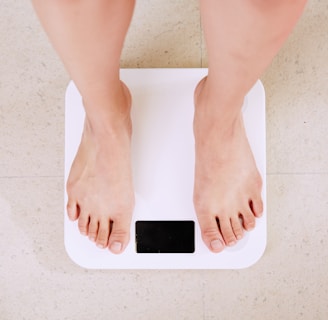
Have you ever worked hard to lose weight, only to watch it slowly creep back on—no matter how careful you are? You’re not alone, and it’s not just about willpower. It turns out your body has a built-in system that tries to keep your weight stable, even if it’s higher than you’d like.
This is called the Weight Set Point Theory, and understanding it can help explain why weight loss is hard—and how you might actually reset your body’s “thermostat” for weight.
🧠 What Is the Weight Set Point?
Think of your body like a smart thermostat. Just like your thermostat keeps your house at a certain temperature, your body tries to keep your weight within a certain range—its "set point." This range is influenced by:
Genes
Hormones
Past weight history
When you lose weight, your body fights back:
It makes you hungrier (hello, ghrelin).
It makes you feel less full (lower leptin).
It slows down your metabolism so you burn fewer calories.
This is why you may feel like your body is working against you after you’ve lost weight—it kind of is.
🥦 Why Is It So Hard to Keep Weight Off?
It’s not just in your head. Studies show that after weight loss, these hunger and metabolism changes can last for over a year, making weight regain incredibly common.
Your body doesn’t know you’re trying to be healthier—it just thinks you’re starving. So it tries to pull you back to your old weight.
🔄 Can You Actually Change Your Set Point?
The exciting news: yes, you can—but it takes time and consistency.
Here’s how you can start shifting your set point downward:
1. Keep the Weight Off for at Least 1–2 Years
Your body needs time to adjust. If you can maintain your weight loss for 12–24 months, your body may start to accept this lower weight as your new normal.
2. Eat in a Way That Supports Satiety
Focus on protein and fiber-rich foods to feel fuller longer.
Avoid extreme calorie cutting, which can backfire by slowing your metabolism too much.
3. Exercise Regularly
Physical activity helps prevent weight regain and may support a new set point. Experts recommend at least 200–300 minutes per week of moderate-intensity exercise for weight maintenance.
4. Get Support
Behavioral support (like coaching, tracking progress, or joining a support group) helps keep you on track during the long journey of maintenance.
💊 What About Medications or Surgery?
If lifestyle changes alone aren’t enough, you’re not out of options.
Medications
New obesity medications like semaglutide (Wegovy) and tirzepatide (Zepbound) help by:
Reducing appetite
Improving fullness
Supporting long-term weight loss (15–20% on average)
They also may help your brain and body settle into a lower set point over time.
Bariatric Surgery
For some people, procedures like gastric bypass or sleeve gastrectomy offer the best chance at long-term weight loss. These surgeries:
Lower hunger hormones
Increase fullness hormones
Change how your brain responds to food
They don’t just shrink your stomach—they also change your biology.
🕒 How Long Until the Body Accepts a New Weight?
Experts say it can take at least a year—sometimes two or more—to really “reset” your body’s weight thermostat. The longer you keep the weight off, the more likely your body is to stop fighting you.
💡 Final Thoughts
If you’ve struggled with weight loss and regain, you’re not weak—you’re up against powerful biology. But with the right tools, support, and enough time, you can train your body to be comfortable at a lower weight.
Resetting your set point is possible. It just takes patience, persistence, and sometimes medical help.
📚 Evidence and Sources
Sumithran P, et al. "Long-term persistence of hormonal adaptations to weight loss." New England Journal of Medicine. 2011;365(17):1597–1604.
Hall KD, et al. "Energy balance and its components: implications for body weight regulation." Am J Clin Nutr. 2012;95(4):989–994.
Wilding JPH, et al. "Once-weekly semaglutide in adults with overweight or obesity." NEJM. 2021;384(11):989–1002.
Wing RR, Phelan S. "Long-term weight loss maintenance." Am J Clin Nutr. 2005;82(1 Suppl):222S–225S.
Stefater MA, et al. "Physiology of weight loss surgery." Annual Review of Physiology. 2012;74:131–156.